



Semrush’s Pro plan runs $139.95 per month. For a solo blogger or a small business managing one or two websites, that’s a steep commitment — especially when most users only tap into a fraction of what the platform offers.
The good news: a solid mix of free and budget-friendly tools can cover everything from keyword research and site audits to backlink monitoring and competitor analysis. Some of these tools are genuinely free with no strings attached. Others offer freemium plans that are actually usable, not just teasers. And a handful of paid alternatives deliver 70–80% of Semrush’s core SEO functionality at one-third to one-tenth the price.
This guide breaks down the real options — what each tool does, where it falls short, and how to combine them into a toolkit that works.

WordPress SEO tools and plugins
The Quick Verdict (For Those Short on Time)
No single free tool replaces Semrush end-to-end. Semrush is an all-in-one platform covering SEO, PPC, content marketing, social media, and competitor intelligence. Free tools cover SEO essentials — but not that full stack.
That said, combining two or three free tools covers most workflows for bloggers, WordPress site owners, and small businesses.
| Your Situation | Recommended Path |
|---|---|
| $0 budget | Google Search Console + Google Keyword Planner + Ahrefs Webmaster Tools |
| Under $15/month | Ubersuggest Individual ($12/mo) covers keywords + competitor research |
| Under $50/month | Mangools Basic ($29.90/mo annual) or Moz Starter ($49/mo) |
| Agency / client work | SE Ranking ($65/mo) for rank tracking, audits, and white-label reports |
| PPC + SEO combined | SpyFu ($39/mo) — unlimited competitor ad and keyword data |
Who can realistically switch away from Semrush: Bloggers, WordPress site owners, solopreneurs, and small businesses running one to five sites with no active Google Ads campaigns.
Who should stay on Semrush: Marketing agencies managing 10+ clients, businesses running PPC campaigns at scale, and teams that rely on Semrush’s content marketing or social media tools daily.
Why So Many People Are Dropping Semrush
Semrush’s current pricing: Pro at $139.95 per month is the entry-level plan. Step up to Guru at $249.95 if you need historical data and content marketing tools. The Business plan hits $499.95 per month.
Those prices are defensible for agencies billing clients for SEO work. For everyone else, the math gets uncomfortable fast. A solo content creator paying Semrush Pro for twelve months spends $1,679 annually on a platform they may use for keyword research, a few competitor lookups, and occasional site audits.
The core issue is feature bloat. Semrush bundles roughly thirty tools into one subscription: keyword research, backlink analysis, rank tracking, site audits, PPC research, content marketing, social scheduling, local SEO listing management, and more. Most small business users rely on two or three of these functions. The rest go unused.
Specialized tools do specific things better, often for less. Google Search Console handles site performance monitoring better than Semrush for your own domain — and it’s free. Ahrefs edges out Semrush on backlink data quality. Mangools’ KWFinder is specifically built for keyword research in a cleaner, simpler interface. You can stitch together a capable SEO workflow without paying for everything at once.
WordPress SEO plugin guides and comparisons
Truly Free SEO Tools (No Credit Card, No Catch)
These four tools are 100% free. Not freemium — genuinely free, with no daily search limits or paywalled features. The trade-off: they’re scoped to your own site data, not competitors’.

Google Search Console
Start here. Google Search Console shows which queries drive traffic to your site, average positions, click-through rates, crawl errors, Core Web Vitals scores, and index coverage issues. For monitoring your own site’s health and understanding which pages rank for what, it’s unmatched — and Semrush actually pulls data from GSC for some of its reports anyway.
Best for: Ongoing site health monitoring, understanding which keywords you already rank for, identifying pages that dropped in visibility.
Free plan: 100% free, no limits, requires a Google account and site ownership verification.
Honest limitation: Shows your site only — no competitor data, no keyword suggestions for new content.
Google Keyword Planner
Built inside Google Ads, Keyword Planner gives you search volume ranges, CPC estimates, and keyword competition levels. It’s the most authoritative keyword data source available because it comes directly from Google — the same engine you’re trying to rank on.
Best for: Discovering keyword ideas around seed terms, understanding CPC for commercial keywords, planning content for Google search intent.
Free plan: Free with any Google account. Precise search volume data is most accurate when you have an active Google Ads spend; otherwise, volumes appear as ranges (e.g., 1K–10K).
Honest limitation: Ranges instead of exact numbers without ad spend. Competition score reflects advertiser competition, not organic SEO difficulty.

Google Trends
Keyword Planner tells you search volume. Google Trends tells you whether that volume is rising or falling. For content planning — deciding whether to write about a topic now or whether interest has peaked — Trends is the only free tool that shows this data with geographic granularity.
Best for: Identifying trending topics, seasonal content planning, comparing keyword interest across regions.
Free plan: 100% free, no limits.
Honest limitation: Relative interest data (0–100 scale), not absolute search volumes. Best used alongside Keyword Planner, not instead of it.
Ahrefs Webmaster Tools
This is arguably the most underrated free tool in SEO. Ahrefs Webmaster Tools gives verified site owners access to a site audit (170+ SEO checks), up to 1,000 backlinks per domain, up to 1,000 organic keywords, and web analytics — completely free for unlimited verified sites.

You get 5,000 crawl credits per month per project — enough for most small to mid-size sites. The backlink data quality is excellent; Ahrefs maintains one of the largest link indexes in the industry.
Best for: Technical site audits, monitoring your backlink profile, identifying which of your pages rank for organic keywords.
Free plan: 100% free. Requires site ownership verification via DNS record, HTML tag, or Google Search Console integration.
Honest limitation: Your own verified sites only. No competitor backlink research, no keyword explorer for discovery — those require a paid Ahrefs subscription.
Freemium Tools with Genuinely Useful Free Plans
Three searches per day. Five searches per day. Unlimited — but no saving. The freemium tier labels sound generous until you see the actual limits. Here’s what you actually get from the most popular options before hitting a paywall.
| Tool | Free Daily Limit | What You Get Free | Where It Cuts Off |
|---|---|---|---|
| Ubersuggest | 3 searches/day | KW research, site audit overview, competitor top pages | Detailed keyword lists, bulk exports |
| Mangools | 5 searches/day | KWFinder (15 keyword results), SERPChecker data | Full keyword lists, 5 competitor keywords max |
| Answer Socrates | 3 searches/day | Question-based KW discovery, 1 recursive search, CSV export | Bulk exports, unlimited clustering credits |
| Moz | 3 searches/day | Keyword Explorer, Link Explorer, domain authority data | Full reports, historical keyword data |
| SEO PowerSuite | Unlimited | Full desktop app access — all features unlocked | Cannot save projects or export data |
| Serpstat | Limited | Keyword and domain overview | Nearly all detailed data behind paywall |
Ubersuggest
Neil Patel’s tool is the most beginner-accessible freemium option. The free tier gives you three searches per day — enough for regular, focused research if you’re strategic about it. You get keyword search volume, SEO difficulty, CPC, and a basic competitor overview. The onboarding is smooth, and there’s a Chrome extension for on-the-fly keyword checking.

Free limit: 3 searches/day. Paid Individual plan: $12/month (150 daily searches, 1 domain, 125 tracked keywords).
Honest assessment: Keyword database is smaller than Semrush or Ahrefs. Fine for light research; you’ll outgrow it quickly if you’re managing multiple sites or running active link-building campaigns.
Mangools (KWFinder + 4 Tools)
Mangools bundles five tools: KWFinder for keyword research, SERPWatcher for rank tracking, LinkMiner for backlink analysis, SERPChecker for SERP analysis, and SiteProfiler for domain authority data. The free plan offers five searches per day — modest, but KWFinder is genuinely good at finding low-competition long-tail keywords that Semrush sometimes misses in its larger, noisier interface.
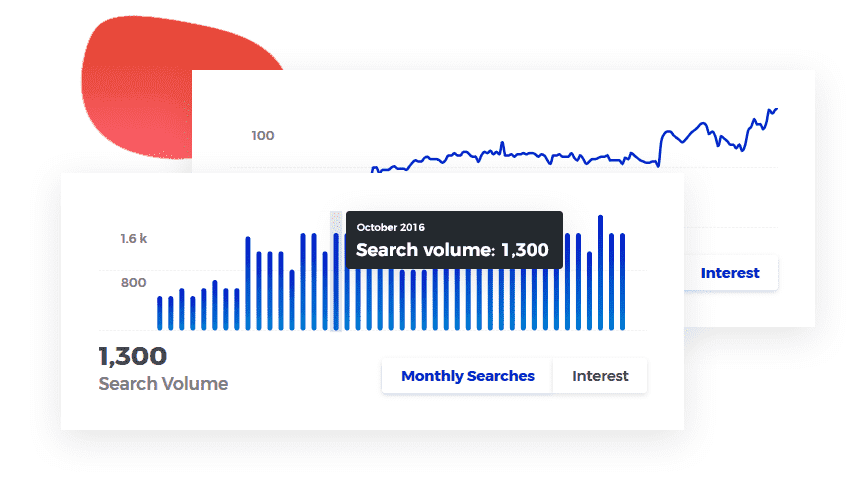
Free limit: 5 searches/day; 15 keyword results per search; 5 competitor keywords max.
Paid entry: Basic plan $29.90/month (billed annually) or $49/month month-to-month.
Honest assessment: The clean interface and long-tail keyword strength make it an excellent choice for bloggers and WordPress site owners. Lacks the PPC research depth of Semrush. Database is smaller than Ahrefs.
SEO PowerSuite (Free Desktop App)
A desktop application — not a web tool — that offers completely unlimited access to all features without asking for your credit card. The free version’s single limitation: you can’t save your project data or export reports. For one-off audits or periodic reviews where you don’t need to track history, that’s workable.
Free limit: No daily search limit. Cannot save or export data. Requires desktop installation (Windows/Mac).
Paid entry: Professional plan $299/year for full saving and reporting capabilities.
WordPress site audit tools and SEO plugins
Best Budget-Paid Semrush Alternatives (Under $70/Month)
If you’re willing to spend something — even $12 to $65 per month — the value-per-dollar improves dramatically over Semrush’s pricing. These tools each do specific things well at a fraction of the cost.
| Tool | Entry Price/Month | Best For | Free Plan? | Key Strength vs Semrush |
|---|---|---|---|---|
| Ubersuggest | $12 | Budget beginners, basic research | Yes (3/day) | Lowest entry cost; easiest onboarding |
| Mangools | $29.90 (annual) | Bloggers, keyword research focus | Yes (5/day) | KWFinder — best-in-class KW difficulty |
| Moz Pro | $49 | Authority metrics, beginner SEOs | Yes (3/day) | DA/PA metrics, industry-standard benchmarks |
| SpyFu | $39 | PPC + competitor keyword spying | No (trial) | Unlimited historical competitor ad data |
| SE Ranking | $65 | Agencies, rank tracking, white-label | 14-day trial | White-label reports; rank tracking accuracy |
| Ahrefs Starter | $29 | Entry into Ahrefs ecosystem | AWT free | Ahrefs’ backlink index at entry pricing |
SE Ranking — Best for Small Agencies and Consultants
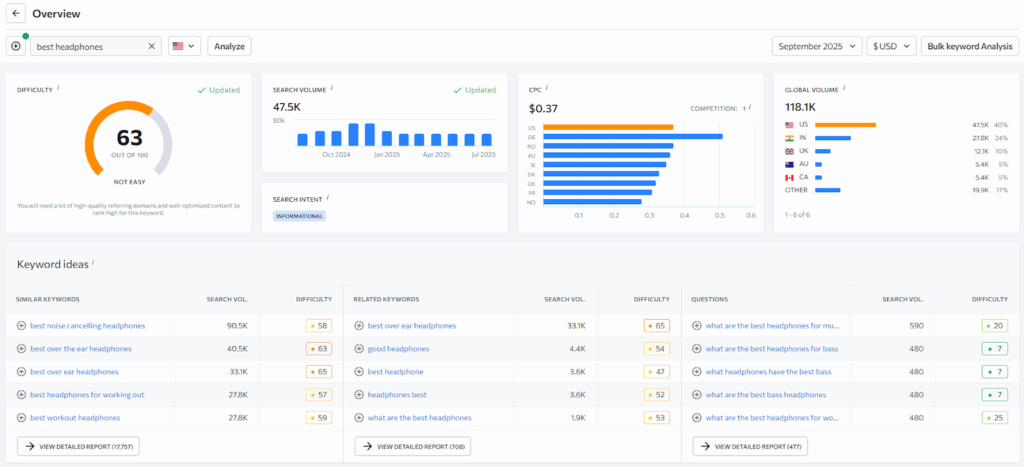
SE Ranking’s Essential plan at $65/month covers rank tracking, keyword research, site audits, competitor analysis, and on-page SEO checks. The Pro plan at $119/month adds white-label reports — a feature Semrush charges significantly more for in comparable tier plans.
Rank tracking is where SE Ranking is particularly strong: accurate daily position updates across multiple search engines and locations. If rank monitoring is your primary use case and Semrush feels like overkill for the price, SE Ranking covers that workflow well at roughly half the cost.
Honest caveat: Keyword database is smaller than Semrush or Ahrefs. Some users report the interface has a learning curve for beginners. Customer support has mixed reviews.
SpyFu — Best for PPC and Competitor Research
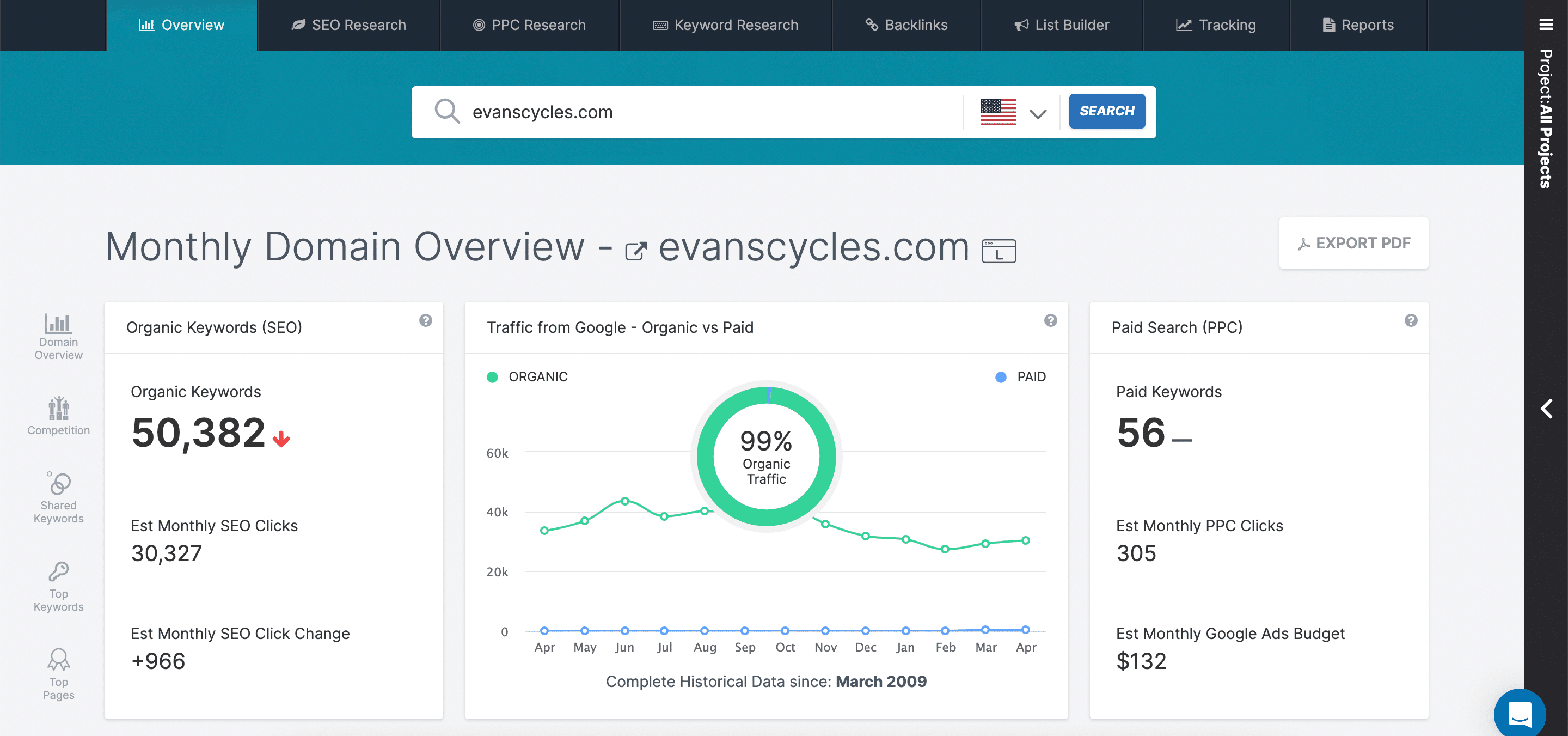
SpyFu’s defining feature is unlimited historical competitor data across all plans. Enter any domain and see every keyword they’ve ever ranked for organically, every Google Ad they’ve run, and the keywords they’re bidding on. The Basic plan at $39/month includes unlimited searches and data exports — a genuinely competitive value for competitor research.
For businesses that blend SEO and paid search, SpyFu fills a gap that Mangools and Ubersuggest can’t. Semrush’s advertising toolkit is more comprehensive, but SpyFu’s core competitor spy functionality is solid for the price.
Honest caveat: No free plan. Organic backlink data isn’t as deep as Ahrefs. Best value when PPC research is part of your workflow.
Mangools — Best for WordPress Bloggers
At $29.90/month on annual billing, Mangools offers the best price-to-usability ratio for bloggers focused on organic keyword research. KWFinder’s keyword difficulty scores are clear and actionable — you get a number, a color indicator, and a SERP breakdown showing exactly why a keyword ranks the way it does.
For WordPress site owners, Mangools pairs naturally with on-page plugins like Rank Math or Yoast SEO. You research and find the keyword in KWFinder, then optimize your content in WordPress using your SEO plugin — a clean, efficient workflow that costs far less than Semrush.
Honest caveat: No native WordPress plugin. Backlink database is smaller than Ahrefs. Once you’re running multiple sites at scale, the daily limits become restrictive.
Best WordPress SEO plugins for keyword optimization
How to Build a Free SEO Toolkit (3 Practical Combinations)
Instead of replacing Semrush with one tool, replace it with a deliberate combination. Here are three stacks based on different budgets and situations.
Stack 1: The Zero-Budget Blogger
- Google Search Console — monitor rankings, find opportunities in existing content
- Google Keyword Planner — discover new keyword ideas and volume ranges
- Ahrefs Webmaster Tools — run site audits, check backlinks for your domain
Total cost: $0. Coverage: ~40% of Semrush Pro’s SEO capabilities — covers site health, keyword discovery, and basic backlink monitoring.
Stack 2: The WordPress Site Owner
- Google Search Console — site performance and indexing
- Ahrefs Webmaster Tools — technical SEO audits and backlink data
- Google Trends — content planning and trend identification
- Rank Math or Yoast SEO (WordPress plugin) — on-page optimization
Total cost: $0. Coverage: ~50% of Semrush for a WordPress site owner’s most common SEO needs — without any monthly subscription.
Stack 3: The Lean Small Business ($12/month)
- Google Search Console — free baseline monitoring
- Ubersuggest Individual ($12/month) — keyword research, competitor top pages, site audit reports
- Ahrefs Webmaster Tools — free backlink and technical audit layer
Total cost: $12/month. Coverage: ~60% of Semrush Pro’s core SEO workflow at roughly 9% of the subscription cost.
What Free Tools Cannot Replace
Honest answer: certain Semrush features have no meaningful free equivalent. If your workflow depends on these, the alternatives above won’t cut it.
- PPC research at depth: Semrush’s Advertising Research toolkit — competitor ad history, display advertising, CPC trends — goes further than SpyFu’s free tier or any no-cost option.
- Content Marketing suite: Semrush’s Topic Research, SEO Writing Assistant, and Content Audit tools have no free equivalent. The closest is the free tiers of Answer Socrates (topic discovery) and Google Docs (drafting) — usable but not the same.
- Social Media management: Semrush’s social publishing and analytics module has no free alternative in the SEO tool space.
- Local SEO listing management: Semrush’s local listing tool syncs your business across directories. Alternatives like Google Business Profile (free) cover Google, but not the broader directory ecosystem Semrush manages.
- Multi-client scale: If you’re tracking 50+ domains for clients, reporting in white-label format, and running automated alerts — you need either SE Ranking at the Pro level or Semrush. Free tools don’t scale to that.
WordPress local SEO plugins and strategies
Who Should Still Use Semrush
Switching away from Semrush makes sense for some users and is a bad idea for others. Here’s a direct breakdown.
Stay on Semrush if you:
- Run Google Ads campaigns and need integrated PPC + SEO competitor research
- Manage 10 or more client sites and need white-label reporting at scale
- Use Semrush’s Content Marketing platform daily for topic research and brief writing
- Run local SEO for multiple physical locations and rely on listing management
Consider switching if you:
- Use Semrush primarily for keyword research — Mangools or Ubersuggest cover this at far lower cost
- Need only site audit and backlink monitoring for your own site — Ahrefs Webmaster Tools is free
- Run one to three WordPress sites without active PPC campaigns
- Are a blogger or solopreneur who finds Semrush overwhelming or underused
Frequently Asked Questions
What is the best completely free alternative to Semrush?
For your own site’s data, combining Google Search Console and Ahrefs Webmaster Tools gives you site health monitoring, keyword rankings, backlink data, and technical SEO audits — all free. Neither does competitor research, but for site management, they’re more than sufficient.
Can I use Google Search Console instead of Semrush?
For monitoring your own site, yes — GSC covers performance data, indexing issues, Core Web Vitals, and which queries you rank for. It doesn’t do competitor analysis, keyword discovery for new content, or backlink monitoring. Think of it as the foundation of a free toolkit, not a full replacement.
Is Ahrefs Webmaster Tools actually free?
Yes. Ahrefs Webmaster Tools is completely free for verified site owners. You get a site audit covering 170+ checks, up to 1,000 backlinks, up to 1,000 organic keywords, and web analytics per project. You can verify unlimited websites. The free tier doesn’t require a credit card and has no time limit.
What’s the cheapest paid Semrush alternative?
Ubersuggest Individual at $12/month is the lowest-priced meaningful alternative. For $12 you get 150 daily searches, keyword research, site audit reports, and competitor top page analysis for one domain. The Ahrefs Starter plan at $29/month (launched January 2026) is the next tier up, adding access to Ahrefs’ vastly larger data set.
Which Semrush alternative is best for keyword research specifically?
Mangools’ KWFinder is widely regarded as one of the cleaner, more intuitive keyword research tools available. It excels at identifying low-competition long-tail keywords with clear difficulty scoring. For question-based keyword discovery, Answer Socrates offers a useful free tier with 3 searches per day.
Can free tools handle competitor analysis?
Partially. Ubersuggest (3 free searches/day) and Moz (3 free searches/day) let you look up competitor domains and see their top-ranking keywords. Ahrefs Webmaster Tools doesn’t cover competitors — you’d need a paid Ahrefs plan for that. For PPC competitor research, SpyFu’s $39/month Basic plan is the most complete option under $70/month.
Is Ubersuggest good enough to replace Semrush?
For basic keyword research and site audits on a single site, yes. For backlink analysis, PPC research, or managing multiple sites at scale, no. Ubersuggest’s database is smaller than Semrush’s, and the free plan’s 3 daily searches become limiting quickly if you’re doing regular research.
Which tool is best for WordPress site owners specifically?
The zero-cost combination of Google Search Console, Ahrefs Webmaster Tools, and an on-page SEO plugin like Rank Math or Yoast covers the most common WordPress SEO needs. For keyword research beyond your existing content, Mangools (starting at $29.90/month annually) pairs naturally with WordPress workflows without requiring a full Semrush subscription.
How do free SEO tools compare in data accuracy?
Google’s tools (Search Console, Keyword Planner) have the most accurate data for Google search — they source directly from Google. Third-party tools like Ubersuggest or Moz estimate search volumes based on third-party data, which can vary. For your own site’s ranking data, GSC is always more accurate than any third-party tool.
Does Semrush have a free version?
Semrush offers a limited 7-day free trial on paid plans. There’s no permanent free tier. After the trial, you need a Pro plan at $139.95/month to continue. By contrast, tools like Ahrefs Webmaster Tools, Google Search Console, and Google Keyword Planner remain free indefinitely.
Final Thoughts
Semrush is a capable platform, but its pricing reflects an all-in-one enterprise tool — not the workflow of a blogger, solopreneur, or small business managing a few WordPress sites.
For most users in that category, a combination of free tools covers the essentials: Google Search Console for site monitoring, Ahrefs Webmaster Tools for backlinks and audits, and Google Keyword Planner for keyword discovery. Adding Ubersuggest at $12/month or Mangools at $29.90/month fills the gaps in competitor research and keyword difficulty scoring.
The right answer depends on what you actually use. List the two or three things you do most in Semrush, then find the tool that does those specific things at a price that makes sense for your business. More often than not, you’ll find a combination that covers your workflow for far less — and frees up budget for other growth priorities.
