


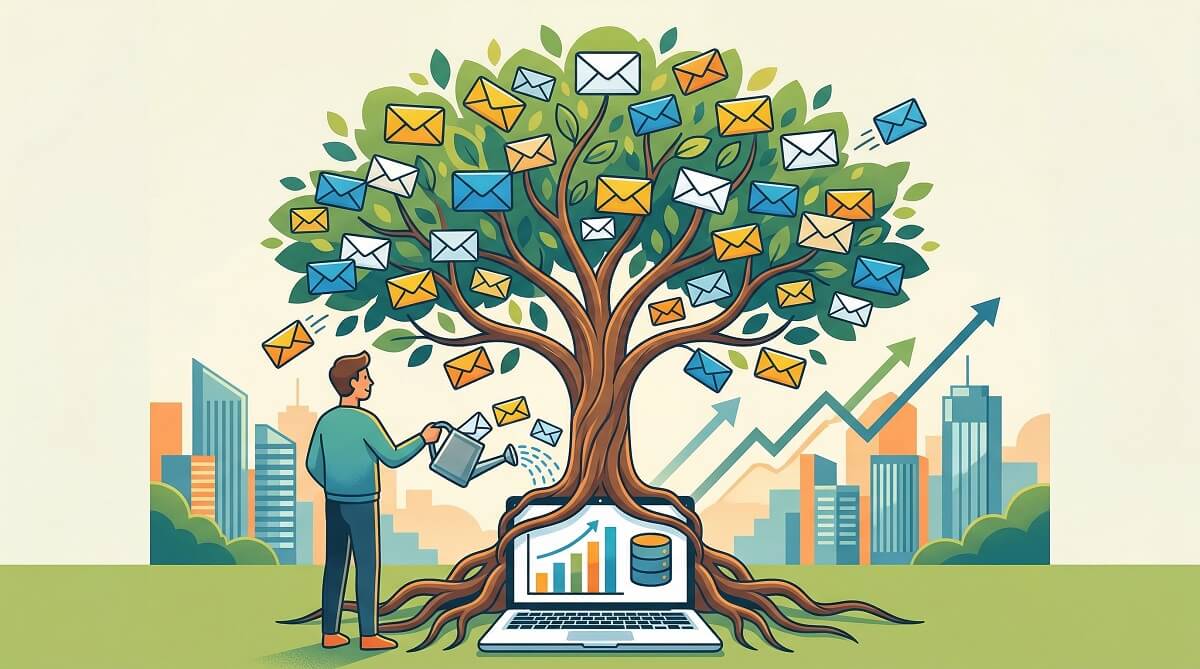
Here’s something most business owners don’t realize until it’s too late: every follower you have on Instagram, every fan on Facebook, every connection on LinkedIn — none of them are yours. The platform is just letting you borrow them. Change the algorithm, suspend your account, or shut down the service entirely, and your audience disappears overnight.
Your email list is the only marketing audience you actually own. No platform can take it away, no algorithm can hide your messages, and no policy update can cut off your access. For small business owners, entrepreneurs, and freelancers building something for the long haul, that distinction matters enormously. This guide breaks down exactly why building an email list should be a business priority — and what the data actually says about its impact.
wplasma.com — WordPress tips and business tools
The Short Answer: What the Numbers Say
Before diving into the details, here’s the bottom line for anyone making a quick decision about where to invest their marketing effort.
Email marketing returns an average of $36–$42 for every $1 spent, according to HubSpot (2024) and the DMA Marketer Email Tracker — making it the highest ROI channel in marketing. By comparison, PPC advertising returns roughly $2 per $1 spent, according to Google’s own economic impact data.
The average email open rate across all industries sits at around 35–50% (Mailchimp benchmarks and HubSpot data, 2023–2024). Even at the lower end, that’s dramatically higher than the organic reach on most social platforms, where the average Facebook post reaches roughly 5–6% of page followers.
Quick Comparison: Email vs Other Marketing Channels
| Channel | Average ROI per $1 | Typical Organic Reach | Do You Own the Audience? | Algorithm Risk |
|---|---|---|---|---|
| Email marketing | $36–$42 | 35–50% open rate | Yes — fully owned | None |
| Social media (organic) | Hard to measure | ~5–6% (Facebook avg) | No — platform-owned | High |
| PPC / Paid Ads | ~$2 | Paid reach only | No — stops with budget | None |
| SEO (organic search) | Varies widely | Depends on ranking | Partial | Medium |
The numbers favor email. But the more important reason to build a list goes beyond ROI — it’s about business resilience.
What an Email List Is (and What It Isn’t)
An email list is a permission-based collection of contacts — people who have actively chosen to receive communication from you. The key word is “permission.” An email list is not your personal address book, a purchased database, or a scraped spreadsheet of contacts. Those approaches are not just ineffective; they violate regulations like GDPR (in the EU) and CAN-SPAM (in the US) and can result in fines and deliverability damage.
A properly built email list has three components:
- An email service provider (ESP) — the software that manages your contacts, lets you design campaigns, and delivers emails reliably (more on ESPs below)
- Opted-in contacts — people who specifically asked to hear from you, confirmed by a form submission or sign-up action
- A place to collect emails — a website signup form, a landing page, a checkout opt-in, or a content download gate
With these three elements in place, you have the infrastructure to reach your audience whenever you need to — without asking anyone’s permission.
How an Email List Differs from a Social Media Following
Social media followers are not an asset you control. When you gain followers on Instagram or subscribers on YouTube, you’re building an audience on someone else’s property. The platform determines how many of those followers see your content, when they see it, and whether your account remains active at all.
An email list works differently. You can download every contact, import them into a new platform, and send a message tomorrow — regardless of what any tech company decides to do. That portability is something no social network offers. According to HubSpot’s email marketing research, there are currently 4 billion daily email users worldwide, with 347 billion emails sent every single day. Email isn’t competing with social — it’s in a category of its own.
The Real Reason Email Outperforms Every Other Channel
Reach and ROI are the two metrics that explain email’s dominance, but understanding why they’re so strong reveals something important about how email marketing actually works.
When someone gives you their email address, they’re making a deliberate choice to hear from you. That opt-in creates a fundamentally different relationship than a social media follow, which is often passive and easily forgotten. The result: email recipients are more engaged, more likely to click, and more likely to buy.

The data bears this out. According to HubSpot (2024):
- 77% of marketers report increased email engagement over the past 12 months
- 37% of brands are increasing their email budgets, while only 10% are cutting them
- Segmented email campaigns generate 30% more opens and 50% more click-throughs than unsegmented sends
- 59% of consumers say marketing emails positively or negatively influence their purchasing decisions
Those numbers reflect what experienced marketers already know: an engaged mailing list is far more valuable than a large-but-passive social following.
What Happens If You Never Build a List — The Hidden Cost
The risk isn’t just a missed opportunity. For businesses built primarily on social media, the risk is existential.
Consider what happens when a platform shifts: Facebook’s organic page reach dropped from roughly 16% in 2012 to around 5–6% today. A business with 10,000 Facebook followers that depended on organic posts to reach them now reaches 500–600 people per post — without paying for ads. Businesses that had been building email lists in parallel didn’t feel that change. Those that hadn’t had to start over or pay to reach the audience they thought they’d already built.
Account suspensions are another real risk. Accounts get flagged or permanently banned by automated systems every day — sometimes in error. Without an email list as a backup, a suspended social media account means losing contact with every customer and prospect you’ve ever reached.
Learn more about building a resilient WordPress-powered business
The Opportunity Cost, in Plain Math
This is the calculation most business owners never run. Using the industry-standard estimate of a 1–2% email-to-purchase conversion rate:
- 1,000 email subscribers × 1.5% conversion rate = 15 buyers
- 15 buyers × $100 product price = $1,500 per campaign
Run two campaigns a month and that’s $3,000 in revenue from 1,000 subscribers. Without a list, that revenue requires either a paid ad budget or a lucky social post — both unpredictable. With a list, you can generate it whenever you need it, as often as your audience tolerates.

Who Benefits Most from an Email List — By Business Type
One of the most common misconceptions about email marketing is that it’s primarily for eCommerce brands or large companies. In practice, every type of business with repeat customers or repeat visitors benefits from building a list — the application just looks different depending on what you do.
| Business Type | Why an Email List Matters | Best Email Use Case |
|---|---|---|
| Blogger / Content Creator | Recaptures traffic regardless of search ranking fluctuations | Weekly newsletter + affiliate or product offers |
| Freelancer / Service Provider | Stays top of mind between projects; generates referrals | Monthly value email + availability announcements |
| eCommerce / Product Business | Drives repeat purchases and abandoned cart recovery | Promotional sequences + post-purchase nurture |
| Consultant / Coach | Builds trust before selling a high-ticket service or course | Educational drip campaigns + launch sequences |
| Local Business | Reaches existing customers with seasonal offers and events | Promotions + loyalty program updates |
| WordPress Site Owner | Owns the relationship with visitors beyond the session | Blog digest + product or service announcements |
The common thread across all of these: a subscriber list lets you re-engage the people who have already shown interest in what you do. That’s almost always easier and more cost-effective than constantly finding new ones.
Explore WordPress tools for growing your business online
How to Start Building Your Email List
Starting an email list requires three things: a platform to manage it, something to offer in exchange for a sign-up, and somewhere to collect email addresses. None of these are complicated or expensive — most businesses can get started for free.
Step 1: Choose an Email Service Provider (ESP)
An ESP is the software that stores your contacts, lets you design and schedule emails, and handles delivery so your messages reach the inbox rather than the spam folder. Using a personal Gmail or Outlook account to send bulk emails bypasses this entirely — and will get your messages filtered as spam.
Several ESPs offer generous free tiers that are sufficient for most businesses just starting out:
| ESP | Free Tier Limit | Paid Plan From | Best For |
|---|---|---|---|
| Mailchimp | 250 contacts, 500 sends/month | $20/month | Beginners, general small business |
| Brevo | Unlimited contacts, 300 emails/day | Starter plan (from 5K emails/month) | Growing lists, unlimited free contacts |
| Kit (formerly ConvertKit) | Up to 10,000 subscribers, unlimited broadcasts | $33/month | Creators, bloggers, course sellers |
Pricing as of March 2026 — verify on each provider’s website, as plans change.
For WordPress site owners, all three of these platforms have dedicated WordPress plugins or integrations, making it straightforward to embed signup forms anywhere on your site.

Step 2: Create a Lead Magnet
A lead magnet is a free resource you offer in exchange for someone’s email address. It’s the incentive that makes signing up worthwhile. The most important rule: the lead magnet must be directly relevant to your audience’s actual problem or interest. A mismatched lead magnet attracts the wrong subscribers and tanks your conversion rates later.
Common lead magnet formats that work across industries:
- Checklist or quick-start guide — fast to create, high perceived value
- PDF guide or ebook — works well for educational content
- Template or swipe file — high value for professionals (marketers, designers, developers)
- Mini email course — 5-day or 7-day sequences that teach a skill
- Discount code or exclusive offer — best for eCommerce and local businesses
- Quiz or assessment — high engagement and personalization potential
See WordPress plugins for building landing pages and lead capture forms

Step 3: Add a Signup Form to Your Website
Your ESP will provide code or a plugin to embed a signup form directly on your website. The most effective placements are where visitors are already engaged: in a blog post sidebar, at the end of a popular article, in the site header, or as a slide-in or popup after a reader has scrolled through a significant portion of the page.
Exit-intent popups — forms that appear when a visitor is about to leave — can recover 10–15% of would-be bouncing visitors according to Conversion Sciences research. For WordPress sites, most email capture plugins include these triggers without requiring custom code.

Common Mistakes That Stall Email List Growth
A few predictable errors account for most of the frustration businesses experience with email list building:
- Waiting for the “right time” — There’s no minimum follower count or traffic threshold needed before starting. The best time to begin is now; even a list of 100 engaged subscribers has tangible value.
- Sending bulk email from Gmail or Outlook — These tools flag mass sends as spam. An ESP handles deliverability correctly.
- Lead magnet mismatch — Offering a freebie that doesn’t connect to your core product or service fills your list with unqualified contacts who won’t buy.
- Going silent after signup — Subscribers forget you quickly. A simple welcome email sequence (2–3 emails over the first week) prevents this.
- Buying an email list — Purchased lists violate GDPR and CAN-SPAM regulations and nearly always trigger spam filters. The legal and reputational risks are not worth the shortcut.
- No clear value proposition — “Subscribe to my newsletter” gives people no reason to sign up. “Get a free weekly tip for growing your business” is specific and compelling.
Frequently Asked Questions About Building an Email List
How big does my email list need to be to make money?
Smaller than most people assume. Using the industry-standard 1–2% email-to-purchase conversion rate, a list of just 500 engaged subscribers can generate 5–10 sales per campaign. The size matters less than the quality — a list of 1,000 people who match your target customer profile will consistently outperform a list of 10,000 who signed up for an unrelated freebie.
Is email marketing still worth it in 2025?
More than ever, according to the data. HubSpot’s 2024 research found that 77% of marketers reported increased email engagement over the past year, and 37% of brands are actively increasing their email budgets. With 4 billion people checking email daily and returns of $36–$42 per $1 spent, email remains the single highest-ROI marketing channel available.
How is an email list different from social media followers?
The core difference is ownership and reach. Social followers are an audience you’ve borrowed — the platform controls who sees your content, when they see it, and whether your account stays active. An email list is an audience you own: you can export the data, move to a different provider, and send a message tomorrow regardless of platform policies. Email also delivers directly to the inbox, achieving open rates of 35–50% compared to Facebook’s ~5–6% organic reach.
How often should I email my list?
For most businesses, once a week is a solid starting point — frequent enough to maintain a relationship, infrequent enough to stay welcome. Consistency matters more than frequency: an audience accustomed to a Tuesday morning email will disengage quickly if months pass without contact. Once you’ve established a rhythm, you can experiment with frequency based on your open and unsubscribe rates.
Can a small business with 500 subscribers actually make money from email?
Yes. At a 1.5% conversion rate, 500 subscribers would produce 7–8 buyers per campaign. Whether that’s meaningful depends on your product price point. A $50 product generates $350–$400 per campaign; a $500 service generates $3,500–$4,000. The math scales at any list size — which is exactly why it’s worth starting before the list is “big enough.”
Should I buy an email list to get started faster?
No — and this isn’t just a best practices recommendation. Sending commercial email to people who haven’t opted in violates the CAN-SPAM Act in the US, GDPR in the EU, and equivalent laws in most other markets. Penalties can be severe. Beyond the legal risk, purchased lists typically have very low open rates, high spam complaint rates, and damage your sender reputation — making it harder to reach even your legitimate subscribers.
What’s the best free email service provider for beginners?
It depends on your situation. Mailchimp’s free plan (250 contacts, 500 sends/month) suits complete beginners who want a familiar interface. Brevo’s free plan (unlimited contacts, 300 emails/day) is better if you want to grow your contact list without upgrading immediately. Kit’s free plan (up to 10,000 subscribers, unlimited broadcasts) is the strongest free option for content creators and bloggers. All three integrate directly with WordPress.
How do I actually get people to sign up for my list?
The most reliable approach is a relevant lead magnet — a free resource that solves a specific problem your audience has. Pair it with a well-placed signup form (embedded in your content, in your site header, or as an exit-intent popup) and promote it consistently. Existing traffic sources — your blog, social profiles, and your email signature — are the fastest places to start. Paid traffic to a dedicated landing page speeds things up if you have the budget for it.
The One Marketing Asset Worth Protecting
Every marketing channel has risk attached to it. Search rankings shift. Social reach declines. Paid ad costs fluctuate. What makes an email list different is that it insulates your business from most of those variables. It’s the one channel where you control the timing, the content, and the audience — without depending on any third party to deliver your message.
For businesses at any stage — whether you have 50 website visitors a week or 50,000 — an email audience compounds in value over time. The subscribers you collect today are the customers and clients you’ll convert months or years from now. Starting small is fine. Starting later is the only mistake that truly costs you.
Find WordPress email capture plugins and list-building tools at wplasma.com
