

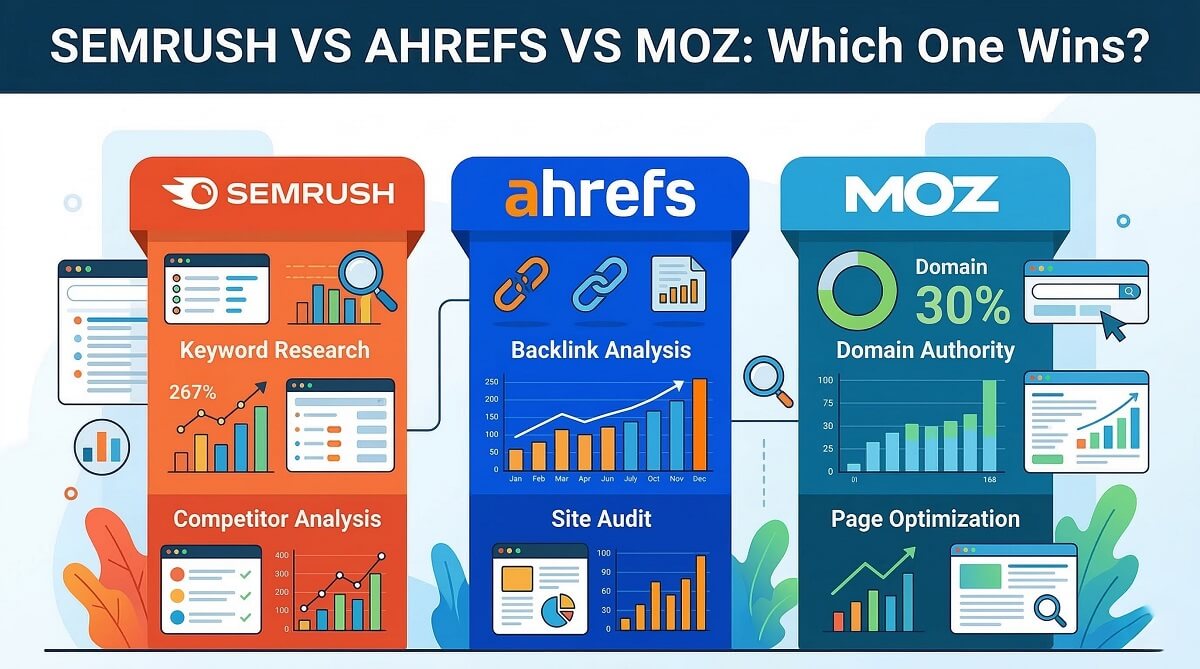
Three tools. Dozens of features. Hundreds of dollars per month. And every comparison article on the internet tells you something different.
Here’s what most of those articles don’t tell you: Semrush, Ahrefs, and Moz aren’t really competing for the same customer anymore. By 2026, each has carved out a distinct identity — Semrush as a full marketing platform, Ahrefs as a data infrastructure powerhouse, and Moz as the affordable foundation for smaller teams. Picking the wrong one doesn’t just waste money; it means fighting your tool instead of your competition.
This comparison skips the marketing spin and focuses on what actually matters: pricing with add-ons included, how each tool handles the new AI search landscape, and — unusually for this topic — what each tool looks like for a WordPress site owner running a real business.
Learn more about WordPress SEO tools and strategies on WPlasma
The Short Answer: Which SEO Tool Should You Choose?
If you’re in a hurry, here’s the honest summary:
- Semrush — Pick this if you run digital marketing campaigns beyond just SEO (PPC, social, content). Best for agencies and in-house teams who want everything in one place.
- Ahrefs — Pick this if organic search and backlinks are your primary focus. The most accurate data for link building and competitive research.
- Moz — Pick this if budget is a primary constraint or you’re managing local SEO. The most affordable entry into professional-grade SEO tooling.
| Feature | Semrush | Ahrefs | Moz |
|---|---|---|---|
| Starting price (entry plan) | $139.95/mo (Pro) | $129/mo (Lite) | $99/mo (Standard) |
| Annual discount | 17% | 17% | 20% |
| Free trial | 7 days | None | 7 days |
| Keyword database (global) | 27.3–27.8B | 28.7B | ~1.25B |
| Backlink database | 43T (incl. historical) | 35T (live only) | ~40–44.8T |
| Best for | All-in-one marketing | Organic search & link building | Budget + local SEO |
| AI visibility tracking | Included in plans | Add-on ($199/mo) | Partial (Brand Authority) |
Now let’s go deeper — because the table above barely scratches the surface of what you need to know before spending $1,200–$6,000 per year on one of these platforms.
What Each Tool Is Actually Built For (Not the Marketing Spin)
Understanding the philosophy behind each platform saves you from making an expensive mistake. These tools have diverged significantly in 2026 — they’re no longer three versions of the same thing at different price points.
Semrush: The Marketing Operating System
Semrush started in 2008 as a browser extension and has methodically expanded into what it now calls an “Online Visibility Management Platform.” That’s not just marketing language — it’s an accurate description of the direction they’ve gone. Today’s Semrush includes SEO tools, PPC research, social media scheduling, content marketing tools, competitor intelligence, and an app store with 60+ third-party integrations.
The core philosophy here is workflow integration. Semrush doesn’t want you to need Hootsuite for social, BuzzStream for outreach, or Clearscope for content optimization — it wants to be all of those things inside one dashboard. For agencies or in-house marketing teams where SEO doesn’t exist in a silo, this consolidation has real dollar value.
Ahrefs: Data Infrastructure Specialist
Ahrefs takes the opposite approach. Rather than expanding horizontally, they’ve doubled down on data supremacy. Their AhrefsBot is the second most active web crawler on the internet, behind only Google. They process approximately 8 billion pages per day and update their live backlink index every 15–30 minutes — a capability that matters enormously when you’re monitoring a competitor’s link-building activity or spotting a negative SEO attack in progress.
Ahrefs’ 2026 tagline is effectively: “You shouldn’t need a marketing assistant. You need a Bloomberg Terminal for the web.” Their recent additions — Web Explorer (SQL-like queries of your site’s code), Brand Radar (AI citation tracking), and Traffic Potential (which we’ll cover shortly) — all reinforce this data-first philosophy.
Moz: The Brand Foundation Builder
Moz has the longest history of the three, founded in 2004 and widely credited with inventing the concept of Domain Authority — a metric that became so ubiquitous it’s now referred to as the “Kleenex of SEO metrics.” In 2026, Moz has found its strategic niche: complexity reduction and local SEO dominance.
Where Semrush and Ahrefs compete for enterprise and agency customers, Moz has built a fortress around local businesses, small teams, and people who want professional-grade SEO without the overwhelming feature density of the bigger platforms. Their 2024 introduction of Brand Authority — a metric that measures brand strength as an entity rather than just link profile — is an interesting bet on the future of AI-influenced search.
Worth noting for WordPress users: Semrush offers a WordPress plugin that integrates with tools like Yoast SEO, giving you content optimization data directly in your editor. Ahrefs has no native WordPress plugin — you’ll use their web dashboard and browser toolbar extension. Moz’s MozBar Chrome extension works effectively for on-page analysis and SERP research without leaving your browser. For WooCommerce store owners specifically, Semrush’s PPC research tools and product keyword data provide clear advantages for e-commerce content and ad strategy.
Keyword Research — Which Tool Finds Better Keywords?
Keyword research is where most users spend the bulk of their time in any of these platforms, so getting this comparison right matters. All three tools have invested heavily here, but the differences in methodology are significant.
Semrush: The Keyword Magic Tool
Semrush’s primary keyword research engine is the Keyword Magic Tool — and the “magic” part isn’t entirely hyperbole. Drawing from a database of 27.3–27.8 billion keywords globally, it’s particularly strong for US-focused research. Semrush indexes 3.7 billion US-specific keywords, compared to Ahrefs’ 2.2–2.3 billion — a gap that matters if most of your traffic comes from American searches.
What makes Semrush genuinely useful here is the built-in search intent classification. Every keyword suggestion is automatically tagged as Informational, Navigational, Commercial, or Transactional — and you can filter by intent instantly. Searching for “running shoes”? You can instantly separate people researching vs. people ready to buy. The tool also auto-clusters keywords into semantic groups (Nike, Trail, Cheap, Wide Fit), which mirrors how content silos should be built and saves hours of manual organization.
Ahrefs: The Traffic Potential Revolution
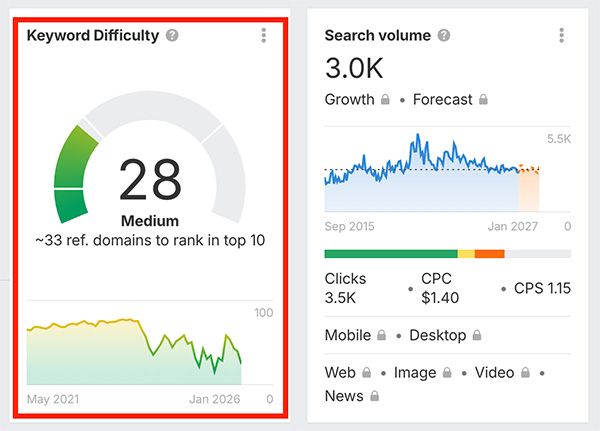
Ahrefs has introduced a concept that challenges how most SEOs think about keyword value: Traffic Potential (TP). Instead of showing the monthly search volume for a single keyword, TP estimates the total organic traffic that the #1 ranking page for that keyword actually receives — across all the variations and related queries it ranks for simultaneously.
This matters more than it might seem. A keyword might show 200 monthly searches, but the top-ranking page could be pulling 4,000 visitors because it ranks for hundreds of variants. Conversely, a keyword with 5,000 monthly searches might be dominated by zero-click results (Google answers it directly), making the actual click volume far lower. Ahrefs explicitly shows the Clicks vs. Volume distinction to protect you from investing in traffic-light keywords that never actually drive visitors.
Ahrefs’ global keyword database (28.7 billion across 217 countries) makes it the stronger choice for international SEO campaigns. If you’re targeting markets in Southeast Asia, Eastern Europe, or Latin America, Ahrefs’ 217-country coverage versus Semrush’s 142 becomes a meaningful operational advantage.
Moz: The Priority Score Approach
Moz’s Keyword Explorer takes a simplified approach that works well for smaller sites and less complex campaigns. Their Priority Score (0-100) combines search volume, keyword difficulty, and Organic CTR into a single number, helping users who don’t want to juggle three metrics simultaneously.
The limitation is scale. Moz’s keyword database is approximately 1.25 billion keywords — roughly 1/20th the size of Ahrefs or Semrush. On any plan, you’re also capped at seeing a maximum of 1,000 keyword suggestions per query. For most small businesses and bloggers, this is more than enough. For agencies or enterprise teams doing deep topical mapping across multiple niches, it starts to feel limiting.
| Criteria | Semrush | Ahrefs | Moz |
|---|---|---|---|
| Global database | 27.3–27.8B | 28.7B ✅ | ~1.25B |
| US database | 3.7B ✅ | 2.2–2.3B | N/A |
| Geographic coverage | 142 countries | 217 countries ✅ | Global (limited) |
| Intent classification | ✅ Built-in | ✅ With extras (branded + local) | Basic |
| Traffic Potential metric | No | ✅ Yes | No |
| Suggestion cap per query | Tens of thousands | Tens of thousands | 1,000 |
| Auto-clustering | ✅ Yes | No | No |
The bottom line on keyword research: Semrush is stronger if your primary market is the US. Ahrefs wins for international coverage and the Traffic Potential metric. Moz is sufficient for smaller sites but will feel limited as keyword research becomes more sophisticated. For a broader look at WordPress SEO strategies and best practices, WPlasma covers these topics in depth.
Explore more WordPress SEO guides on WPlasma
Backlink Analysis — The Feature That Defines These Tools
Backlinks remain one of Google’s most important ranking factors. How well a tool identifies, tracks, and helps you build quality inbound links is arguably its most important capability for pure organic SEO work.
Ahrefs: The Backlink Standard
Ahrefs built its entire reputation on backlink analysis, and that reputation is still earned in 2026. Their live backlink index of 35 trillion links is refreshed every 15–30 minutes, which means when a major news site links to your competitor, you’ll know about it within the hour — not the week. This speed advantage has real strategic implications for time-sensitive campaigns like newsjacking or rapid response to competitor backlink activity.
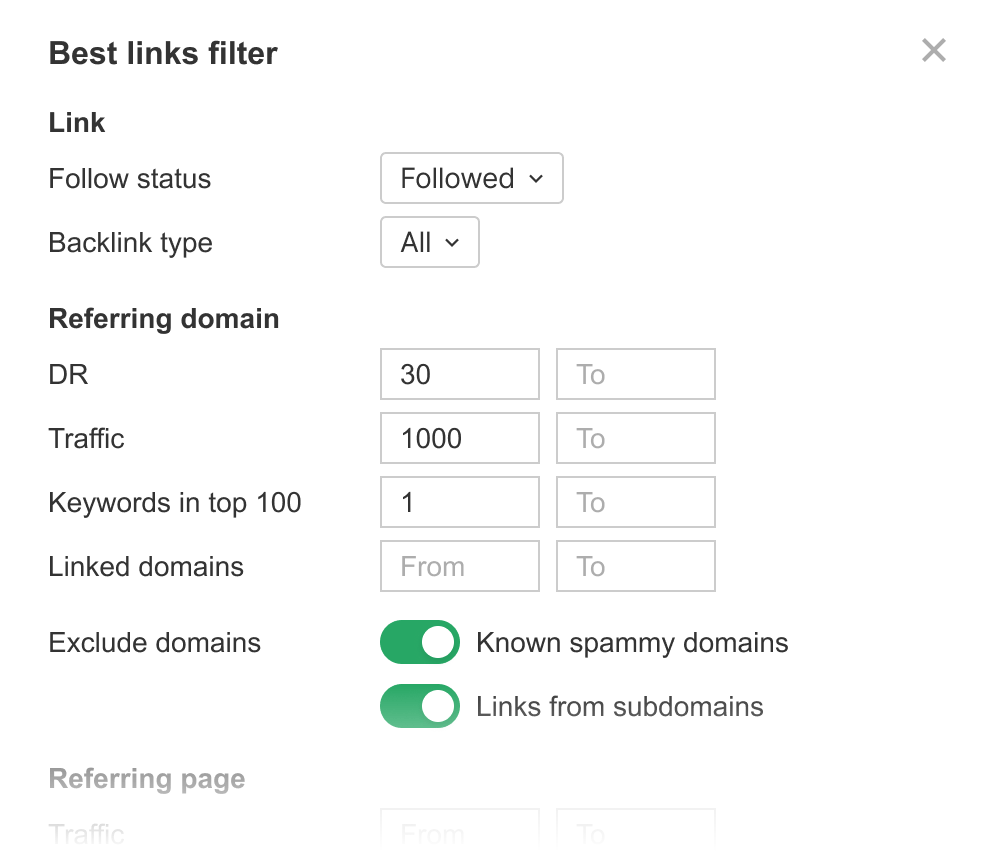
Several Ahrefs-specific capabilities stand out here. Link Intersect lets you compare your backlink profile against up to 10 competitors simultaneously, immediately surfacing sites that link to them but not to you. The broken backlink building workflow is the cleanest in the industry — you can search Content Explorer for broken pages in your niche, immediately see who linked to them, and build your outreach list without leaving the platform. And for developers and data teams, the Ahrefs API exposes 77 different data points per backlink — a level of granularity Semrush and Moz simply don’t match.
Semrush: The Auditing and Outreach Hub
Semrush’s backlink approach is less about raw data speed and more about management infrastructure. Their 43 trillion backlink database includes historical links (ones that no longer exist), which Ahrefs prunes. This makes Semrush’s numbers look larger but Ahrefs’ more actionable for current-state analysis.
Where Semrush genuinely differentiates is in the workflow tools surrounding backlinks. Their Toxic Score system flags potentially harmful backlinks and generates an automated Google Disavow file — useful for agencies who need to show clients they’re actively managing link quality. More significantly, Semrush is the only tool of the three with a built-in CRM for link outreach: find a prospect, locate a contact email, send a templated message, and track the conversation, all inside one platform. For smaller teams without dedicated outreach software, this eliminates a whole category of tool costs.
Moz: The Spam Score Pioneer
Moz’s Link Explorer gives you backlink data with their proprietary Spam Score — a conservative rating based on 17 factors that indicate a link’s risk profile. Where Semrush’s toxicity filter can occasionally flag legitimate links, Moz’s approach is more conservative and produces fewer false positives. This makes it a reliable safety check, though not a replacement for the depth of Ahrefs’ analysis.
One gap to be aware of: Moz doesn’t provide a dedicated broken link building tool, and there’s no built-in outreach CRM. For foundational backlink research on a smaller site, Moz’s Link Explorer is adequate. For serious link building campaigns, you’ll want Ahrefs’ depth or Semrush’s outreach management.
| Criteria | Semrush | Ahrefs | Moz |
|---|---|---|---|
| Index size | 43T (incl. historical) | 35T (live only) ✅ | ~40–44.8T |
| Crawl frequency | Daily | Every 15-30 min ✅ | Weekly/Monthly |
| Broken link building | Adequate | Excellent ✅ | None |
| Built-in outreach CRM | ✅ Yes | No | No |
| Toxic/spam scoring | Toxic Score (aggressive) | None (by philosophy) | Spam Score (conservative) ✅ |
| API data points/backlink | Standard | 77 data points ✅ | Standard |
Best for backlink analysis: Ahrefs, by a clear margin. If link building is central to your SEO strategy, Ahrefs’ data freshness and workflow tools make it the obvious choice. Understanding how to build a strong WordPress site is the foundation that makes these link analysis tools pay off.
Site Audits and Technical SEO — Finding What’s Holding Your Site Back
A site audit tells you what’s broken, misconfigured, or missing on your website from a technical SEO standpoint. All three tools offer auditing functionality, but they approach it differently — and the gaps matter more than the marketing language suggests.
Semrush Site Audit
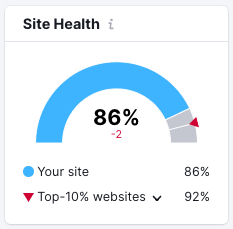
Semrush’s Site Audit checks over 140 technical issues, then distills them into a single “Site Health” percentage that’s easy to screenshot and bring to a client meeting or executive review. It integrates real user data (via Google’s Chrome User Experience Report) with traditional Lighthouse scores, giving you a more complete picture of how your site performs in the real world.
Two features separate Semrush’s auditing from competitors in 2026. First, it includes an AI Search site audit that specifically checks how well your site is structured for AI Overviews and ChatGPT Search — the new frontier of technical optimization that Ahrefs and Moz don’t yet match. Second, issues can be sent directly to project management tools like Trello via Zapier integration, turning technical SEO findings into actionable tickets without manual work.
Ahrefs Site Audit
Ahrefs’ auditing strength is in its flexibility for power users. Their Web Explorer feature lets you write SQL-like queries against your own site’s crawl data — for example: “Show me all pages where the H1 contains ‘Best’ but the title tag does not.” This capability is invaluable for large sites with complex content architectures.
The Page Explorer feature allows instant recrawling of individual pages after you’ve made fixes — you don’t have to wait for the next scheduled full-site crawl to verify that a developer’s change worked. And Ahrefs operates on an always-on crawling model, alerting you to new issues (like a sudden spike in 404 errors) as they happen rather than on a snapshot schedule.
Moz Site Crawl
Moz’s crawl tool is the most beginner-friendly of the three. It identifies critical issues clearly, explains how to fix them in plain language, and doesn’t overwhelm non-technical users with granular debug data. One genuine advantage: Moz’s Standard plan ($99/mo) allows crawling up to 400,000 pages per month — four times the limit of Semrush and Ahrefs at comparable price points. For large WordPress sites with many pages but smaller budgets, this crawl limit can be a deciding factor.
The trade-off is depth. Moz’s auditing doesn’t catch JavaScript rendering issues, complex CSS errors, hreflang implementation problems, or log file anomalies with the same precision as Ahrefs or Semrush. For basic site health maintenance, it’s fine. For forensic technical SEO work, you’ll want more powerful tooling.
Rank Tracking — How Well Do They Monitor Your Keyword Positions?
Rank tracking is how you know whether your SEO efforts are actually working. The key variables are: how many keywords you can track, how often rankings are updated, and which search engines are monitored.
Ahrefs is the most generous on keyword volume — 750 keywords on the entry-level plan, compared to 500 for Semrush and 300 for Moz. But Ahrefs defaults to weekly updates, while Semrush provides daily ranking data out of the box. For anyone who needs to monitor volatile rankings or time-sensitive campaign performance, daily updates have practical value.
Semrush also tracks rankings across more search engines than Ahrefs: Google, Bing, Baidu, ChatGPT Search, and Google AI Mode. Ahrefs currently tracks Google only. Moz covers Google, Bing, and Yahoo. The Baidu tracking is a specific win for Semrush in businesses targeting Chinese markets — 52% of searches in China use Baidu, making this data genuinely useful for international teams.
One Semrush-exclusive feature worth highlighting: their rank tracking includes a “growth opportunity” signal that flags keywords where content improvements are most likely to result in meaningful ranking gains. This is the kind of actionable guidance that turns raw data into specific next steps — the sort of insight that pairs well with solid WordPress content and SEO fundamentals.
| Criteria | Semrush | Ahrefs | Moz |
|---|---|---|---|
| Keywords tracked (entry plan) | 500 | 750 ✅ | 300 |
| Update frequency | Daily ✅ | Weekly | Weekly + on-demand (200x/day) |
| Search engines covered | Google, Bing, Baidu, ChatGPT, AI Mode ✅ | Google only | Google, Bing, Yahoo |
| Growth opportunity flag | ✅ Yes | No | No |
Domain Authority, Domain Rating, and Authority Score — Which Metric Actually Matters?
Every SEO tool assigns a score to websites indicating how “authoritative” they are. But Semrush, Ahrefs, and Moz calculate these scores in fundamentally different ways — and using the wrong one in the wrong context can lead to seriously flawed decisions.
Moz Domain Authority (DA) — The Industry Standard You’ll Use for Client Reports
Moz invented Domain Authority and it remains the industry shorthand. When a client asks “how strong is our domain?” they’re expecting a DA score. It’s calculated using a machine learning model that evaluates linking root domains and attempts to correlate with actual Google ranking patterns. The scale runs from 0 to 100, logarithmically — moving from 50 to 60 is harder than moving from 10 to 20.
DA’s weakness is that it updates slowly, doesn’t account for spam or organic traffic, and can be gamed. A penalized site with an artificially inflated link profile can still show a high DA. This makes it unreliable for domain purchase due diligence — but it remains the de facto language for communicating website strength to non-technical stakeholders.
Ahrefs Domain Rating (DR) — The SEO Professional’s Trust Signal
DR is a pure backlink metric: it measures only the strength and quality of a site’s inbound link profile, ignoring on-page factors, traffic, and domain age. That purity is both its strength and its appropriate use case.
According to industry surveys cited in multiple 2026 analyses, approximately 67% of SEO professionals use DR as their primary authority metric. Ahrefs’ fresher link data means DR responds faster to new link acquisition or loss than DA. The practical application: if a site has a high DR but near-zero organic traffic, that’s a red flag suggesting the links are artificial (link network, expired domain scheme). DR surfaces this discrepancy; DA may not.
Semrush Authority Score (AS) — The Fraud-Resistant Composite
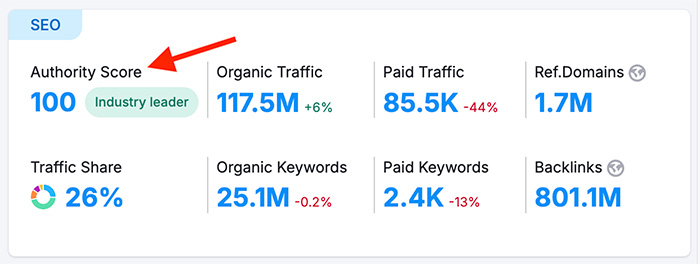
Semrush’s Authority Score is the most technically sophisticated of the three. Their neural network model combines three inputs: backlink profile quality, organic traffic data, and “spam factors” (including unnatural link-to-traffic ratios, excessive dofollow domains from identical IP clusters, and other manipulation signals). A site with a massive link profile but zero traffic gets a low AS — making it the most fraud-resistant metric for domain due diligence and partnership evaluation.
The trade-off: AS is less widely recognized by clients and executives who’ve grown up with DA. You may find yourself explaining it. But for anyone evaluating domain acquisitions, link opportunities, or partnership sites, AS provides protection that DA and DR can’t match.
| Use Case | Best Metric | Why |
|---|---|---|
| Client reporting / executive communication | Moz DA | Universally understood benchmark |
| Evaluating link prospects | Ahrefs DR | Fastest-updating, link-focused |
| Domain purchase due diligence | Semrush AS | Cross-checks traffic + spam signals |
| Brand entity strength for AI search | Moz Brand Authority | Entity-based, not link-based |
AI Features and GEO Readiness — The 2026 Difference
Google’s AI Overviews, ChatGPT Search, and Perplexity have fundamentally changed the game. Content that used to rank #1 now competes for a different prize: being cited inside an AI-generated answer. This shift — often called Generative Engine Optimization (GEO) — is the most important emerging battleground in SEO, and the three platforms have responded to it very differently.
Semrush: AI Visibility Included (Not Sold Separately)
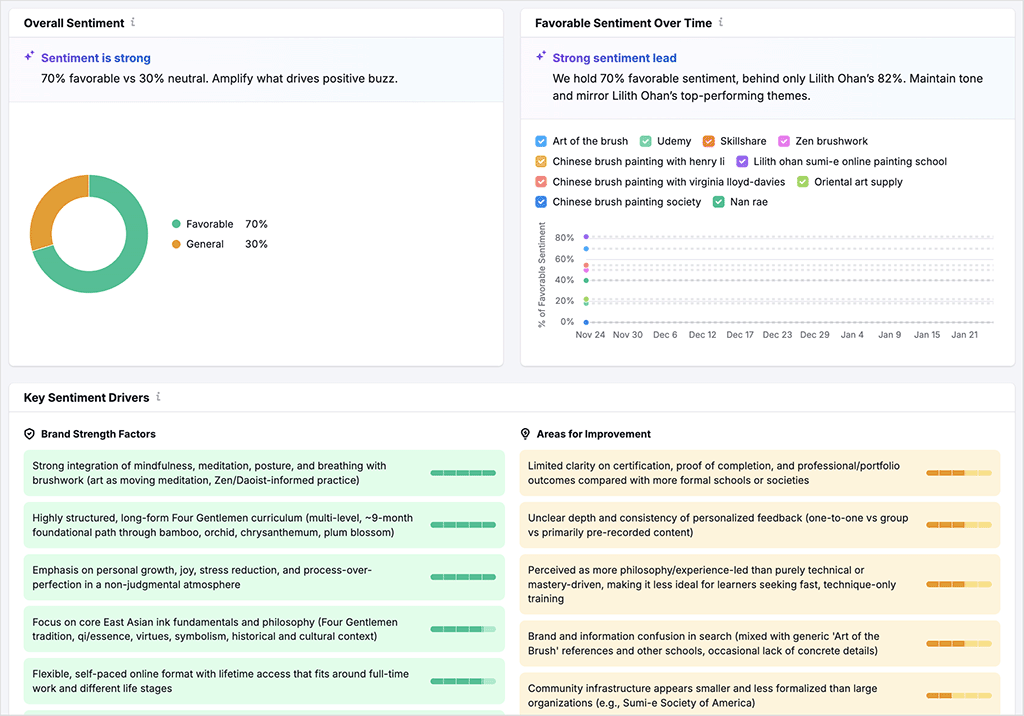
Semrush has made the biggest investment in AI search visibility, and critically, they’ve bundled it into their main plans rather than selling it as an add-on. The AI Visibility Toolkit includes prompt tracking (monitor how your site appears in responses from ChatGPT, Gemini, Perplexity), AI visibility scores (how often your brand is mentioned in AI responses vs. competitors), and brand perception analysis that examines the sentiment and framing of AI-generated descriptions of your business.
Most interesting is Semrush’s AI Search site audit, which checks structural and technical factors that affect how easily AI systems can understand and cite your content — essentially a technical SEO audit for the LLM layer rather than just Google’s traditional crawler.
Ahrefs Brand Radar: Powerful But Expensive
Ahrefs’ answer to AI visibility is Brand Radar, and it’s methodologically interesting: it tracks how often your brand is actually cited in AI-generated responses (not just mentioned) and correlates this with your inbound link profile. The idea is to show the relationship between high-authority editorial mentions and subsequent AI citation frequency — useful for understanding why you’re or aren’t appearing in AI answers.
The catch is the price. Brand Radar starts at $199/month as an add-on to an existing Ahrefs plan. For a small business already paying $129/month for Lite, that’s a 154% price increase to access this feature — likely prohibitive for the audience that needs AI visibility guidance most.
Moz Brand Authority: The Entity Foundation
Moz doesn’t offer direct AI citation tracking yet, but their Brand Authority metric — which measures brand strength as a recognized entity rather than just a link profile — is arguably the right foundational metric for the AI search era. Large language models favor recognized, trustworthy entities when generating answers. High Brand Authority suggests your brand has the kind of online presence that feeds into AI training data and recommendation systems.
This is less immediately actionable than Semrush’s prompt tracking, but it provides a useful baseline for understanding where you stand in the entity-recognition ecosystem.
| Feature | Semrush | Ahrefs | Moz |
|---|---|---|---|
| AI citation tracking | ✅ Included | ✅ Add-on ($199/mo) | No |
| Sentiment analysis in AI | ✅ Yes | No | No |
| AI Search site audit | ✅ Yes | No | No |
| Brand entity metric | Authority Score (partial) | Domain Rating (link-focused) | Brand Authority ✅ |
| Prompt tracking | ✅ Yes | No (Brand Radar tracks citations) | No |
| Cost for AI features | Included in plan | +$199/mo | Partially included |
2026 verdict on AI features: If AI search visibility matters to your business — and it increasingly does — Semrush offers the most complete AI toolkit at no additional cost. Ahrefs’ Brand Radar is methodologically strong but priced as an enterprise add-on.
Pricing — What You Actually Pay (Not Just the Headline Number)
SEO tool pricing is one area where surface-level comparisons are genuinely misleading. The monthly prices look similar across the three platforms, but what you get for that money — and what you’ll pay for when you inevitably need more — varies enormously.
Semrush Pricing (2026)
Semrush’s three main plans are Pro ($139.95/mo), Guru ($249.95/mo), and Business ($499.95/mo). Annual billing saves approximately 17% (verified at semrush.com/pricing, February 2026). At first glance, these are the most expensive options in the comparison — but the price includes substantially more marketing functionality than either Ahrefs or Moz at comparable tiers.
The plan limits are generous for reporting: the Pro plan allows 3,000 reports per day, and the Guru plan 5,000 — effectively unlimited for most small businesses and agencies. Each plan comes with one user seat, and additional users cost $45–100/month depending on plan tier. Social media management, advanced local SEO, Semrush Trends, and market intelligence features are separate add-on subscriptions, which can push monthly costs meaningfully higher for teams that need them.
Ahrefs Pricing (2026) — The Credit System You Should Understand Before Signing Up
Ahrefs’ published pricing looks accessible: Starter at $29/mo, Lite at $129/mo, Standard at $249/mo, Advanced at $449/mo, Enterprise at $1,499/mo. Annual billing saves 17% (verified at ahrefs.com/pricing, February 2026). But the credit system significantly affects the real cost for active users, especially on the Lite plan.
Here’s how it works: on the Lite plan, you receive 500 credits per month. Every time you open a report, apply a filter, or request additional data, that action consumes a credit. Run out? Additional credits cost $50 per 500 credits monthly (per Ahrefs’ official credit pricing documentation). If you’re an active user doing competitive research daily, you can hit 500 credits remarkably fast. The Standard plan provides 600 monthly credits with a more flexible overage structure — and critically, active users on Standard and higher get effectively unlimited usage in practice.
The Lite plan’s 500 monthly credits vs. Semrush Pro’s 3,000 daily reports is the starkest direct comparison: Semrush is dramatically more generous at comparable price points, if report volume matters to you. Ahrefs has no free trial — though a $29 Starter plan gives limited access for evaluation purposes.
Moz Pricing (2026) — The Multi-Seat Advantage
Moz is the most affordable of the three: Standard at $99/mo, Medium at $179/mo, Large at $299/mo, with a 20% annual discount that brings Standard to approximately $79/month effective (verified at moz.com/products/pro/pricing, February 2026). That annual figure makes Moz meaningfully cheaper than Ahrefs’ Lite or Semrush’s Pro over a 12-month commitment.
Moz’s most distinctive pricing advantage is its team-friendly seat structure. The Medium plan includes 2 user seats, and the Large plan includes 3 — while Semrush and Ahrefs charge $45–100/month per additional user. For a two-person marketing team comparing mid-tier plans, Moz Medium at $179/month competes directly with Semrush Guru + one extra user at $289–330/month.
| Scenario | Semrush | Ahrefs | Moz |
|---|---|---|---|
| Solo user, entry plan | $139.95/mo (Pro) | $129/mo (Lite) | $99/mo (Standard) ✅ |
| Solo user, mid plan | $249.95/mo (Guru) | $249/mo (Standard) | $179/mo (Medium) ✅ |
| 2-user team, mid plan | ~$295–330/mo | ~$289–299/mo | $179/mo (seats included) ✅ |
| + AI tracking | Included | +$199/mo | Partial (no add-on) |
| Annual (mid plan, solo) | ~$207/mo | ~$207/mo | ~$143/mo ✅ |
| Report limits (entry plan) | 3,000/day ✅ | 500/month | 150 KW queries/month |
All prices verified February 2026. Prices are subject to change — verify current pricing at official pricing pages.
Who Should Choose Which SEO Tool?
The use-case segmentation most competitors offer is too simple. “Beginners use Moz, experts use Ahrefs” doesn’t capture the real decision factors: team size, geographic focus, budget, and what channels beyond SEO you’re running.
Choose Semrush If…
- Your marketing spans PPC, social media, or display advertising alongside organic search
- You manage multiple clients and need white-label reporting
- Daily rank tracking updates matter for your reporting cadence
- Your primary target market is the US (3.7B US keywords advantage)
- You want AI search visibility tracking without paying extra
- You need an all-in-one tool to replace multiple separate subscriptions
✅ Best for: Digital marketing agencies, in-house marketing teams managing omnichannel campaigns, US-focused e-commerce businesses, WooCommerce store owners who run PPC alongside SEO.
Choose Ahrefs If…
- Organic search and backlink strategy are your primary focus
- You’re running international SEO campaigns in 50+ countries
- You need near-real-time backlink data (link changes matter to your strategy)
- Your team includes data scientists or developers who’ll use the API
- You’re an affiliate publisher or large content site where backlink accuracy is mission-critical
✅ Best for: Technical SEOs, link builders, SaaS companies focused on organic growth, large affiliate publishers, international SEO agencies.
Choose Moz If…
- Your budget is under $200/month
- You’re a solopreneur or small team of 2–3 people
- Local SEO is a significant part of your strategy (Moz Local is best-in-class)
- You’re newer to SEO and want a less overwhelming interface
- You need multiple user seats without paying per-head add-on fees
✅ Best for: Local service businesses, WordPress freelancers managing a handful of sites, small in-house marketing teams, SEO beginners, franchise operations managing local listings.
WordPress Users — A Note on Tool Integration
WordPress-specific workflows affect which tool fits best:
- Semrush: Offers a WordPress plugin that surfaces content optimization recommendations directly in your WP editor, with Yoast SEO integration for on-page data. Best for WooCommerce stores managing product page optimization and PPC in parallel.
- Ahrefs: No native WordPress plugin — you work through the web dashboard and browser toolbar. Best for WordPress developers who want deep site audit and backlink data without relying on an editor-level integration.
- Moz: MozBar Chrome extension integrates cleanly with the WordPress admin workflow for on-page analysis. Good for freelancers doing quick site audits across multiple client sites.
| You Are… | Best Choice | Reason |
|---|---|---|
| Local brick-and-mortar business | Moz | Moz Local for listing management + affordable pricing |
| WordPress freelancer (1-2 sites) | Moz or Ahrefs Lite | Budget-appropriate; Ahrefs if backlinks matter more |
| WooCommerce store owner | Semrush | PPC + keyword tools + WP plugin integration |
| Growing SaaS or affiliate site | Ahrefs | Data depth + international coverage + backlink accuracy |
| Multi-client digital agency | Semrush | Reporting, white-labeling, outreach CRM |
| Technical / data-driven SEO | Ahrefs | API depth, Web Explorer, real-time backlink data |
| Blogger on tight budget | Moz Standard | $79/mo annual rate, sufficient for most blog needs |
| 2-person in-house team | Moz Medium | 2 seats included at $179/mo — best team value |
See more WordPress guides and tool comparisons on WPlasma
Customer Support and User Satisfaction
User satisfaction data tells a nuanced story across the three platforms. The high ratings on Capterra and G2 suggest that users who engage deeply with these tools are generally satisfied — but TrustPilot scores are noticeably lower for all three, which likely reflects frustrated users who hit limitations or billing issues.
| Platform | Ahrefs | Moz | Semrush |
|---|---|---|---|
| Capterra | 4.7 ✅ | 4.5 | 4.6 |
| G2 | 4.5 | 4.3 | 4.5 |
| TrustPilot | 1.9 | 3.1 ✅ | 2.2 |
| TrustRadius | 4.5 | 3.9 | 4.4 |
Ratings sourced from StyleFactoryProductions.com, January 2026 update. Scores out of 5.
On support channels: Semrush is the only tool offering phone support alongside email and live chat, with help documentation available in 14 languages. Both Ahrefs and Moz limit support to email and live chat. Ahrefs compensates with extensive documentation and one of the strongest YouTube tutorial libraries in the SEO industry. Moz’s blog remains one of the best free SEO education resources available — a genuine differentiator for teams still building SEO knowledge. For WordPress-specific guidance and tutorials, WPlasma focuses specifically on the WordPress ecosystem and is a useful complement to the broader SEO tools covered here.
FAQ — Frequently Asked Questions About Semrush vs Ahrefs vs Moz
Which is better: Semrush or Ahrefs?
Neither is universally better — they’re optimized for different things. Semrush is the stronger choice if you run multi-channel marketing (PPC, social, content) and want AI visibility tools without paying extra. Ahrefs is the better choice if organic search and backlink analysis are your primary focus and you need the highest-accuracy data. If you’re US-focused, Semrush’s larger American keyword database gives it an edge in keyword discovery. If you’re doing international campaigns, Ahrefs’ 217-country coverage is the advantage.
Is Moz Pro still worth it in 2026?
Yes, for the right user. Moz is the most affordable path into professional SEO tooling, and its local SEO capabilities (Moz Local) remain best-in-class for brick-and-mortar businesses. The annual Standard plan at approximately $79/month is genuinely competitive for solopreneurs, freelancers, and small teams. Where Moz struggles is at scale — its 1.25 billion keyword database and limited crawl depth start to feel constraining as sites grow. If you’re outgrowing Moz, the natural upgrade path is to Ahrefs (for backlink-focused work) or Semrush (for broader marketing needs).
Does Ahrefs have a free trial?
No. Ahrefs does not offer a standard free trial. They do provide a $29/month Starter plan that gives limited access for evaluation, and some individual tools are available free with restricted features (like their free backlink checker and keyword generator). Semrush and Moz both offer 7-day free trials of their full platforms. If trial access is important to your evaluation process, Semrush or Moz are the practical choices — Semrush occasionally extends trial periods, so check their pricing page for current offers.
What is Traffic Potential in Ahrefs and why does it matter?
Traffic Potential (TP) is Ahrefs’ estimate of how much organic traffic the top-ranking page for a given keyword actually receives — from all related keyword variants it ranks for, not just the target keyword itself. Standard search volume shows how often a single keyword is searched; TP shows the realistic traffic ceiling you could achieve by ranking #1 for that topic. This distinction matters because a keyword with 500 monthly searches might have a TP of 5,000 if the top-ranking page captures traffic from hundreds of related long-tail variants. It prevents you from dismissing valuable topics based on low volume for a single keyword phrase.
What is the difference between Domain Authority, Domain Rating, and Authority Score?
All three are 0-100 scores predicting website strength, but they’re calculated differently. Moz’s Domain Authority (DA) is based on link data and is the most widely recognized metric — use it for client communication. Ahrefs’ Domain Rating (DR) is a pure backlink metric with faster updates — use it when evaluating link prospects. Semrush’s Authority Score (AS) combines links, organic traffic, and spam signals — use it for domain purchase due diligence, where fraud detection matters. They don’t translate to each other and will differ for the same domain.
Can I use these SEO tools with WordPress?
All three work with WordPress sites, but integration depth varies. Semrush has a dedicated WordPress plugin and integrates with Yoast SEO for on-page optimization data directly in your editor. Ahrefs has no native WordPress plugin — you use their web platform and a browser toolbar extension alongside WordPress. Moz offers MozBar, a Chrome extension that provides quick domain authority and on-page data while browsing any site including your WordPress dashboard. For WooCommerce store owners managing PPC alongside organic search, Semrush’s built-in advertising tools are a meaningful workflow advantage.
Is Semrush’s AI visibility tracking worth the premium?
For businesses actively concerned about how they appear in AI search results (ChatGPT, Perplexity, Google AI Overviews), Semrush’s AI Visibility Toolkit included in Semrush One plans is a genuine differentiator. It lets you track brand mentions and citations in AI-generated responses, analyze sentiment, and conduct AI-specific technical audits — all without paying extra. The equivalent Ahrefs functionality (Brand Radar) starts at $199/month as an add-on. If AI search visibility is part of your 2026 marketing strategy, Semrush provides meaningful value that Ahrefs charges significantly more for and Moz doesn’t yet match.
What does the Ahrefs credit system mean for small businesses?
The Ahrefs credit system means that on the Lite plan ($129/mo), you have 500 credits per month to spend on reports and data queries. Each time you open a new report or apply a filter, credits are consumed. For occasional users doing 5-10 searches per day, 500 credits can last the full month. For active researchers doing competitive analysis daily, 500 credits can disappear in 2-3 weeks, triggering overage charges at $50 per 500 additional credits. If you’re evaluating Ahrefs, honestly assess how many reports you’ll run weekly. Standard plan ($249/mo) users get 600 credits with a more forgiving overage structure — consider whether the $120/mo jump is worth it for your usage patterns.
Which SEO tool is best for a small business with a $100/month budget?
Moz Standard at $99/month is the most capable tool at this price point. It provides keyword research, site auditing (400,000 pages/month), rank tracking (300 keywords), and backlink analysis — enough for most small business needs. On an annual plan, Moz Standard runs approximately $79/month. Ahrefs’ Starter plan at $29/month exists but is severely limited in scope. Semrush’s entry plan starts at $139.95/month, above the $100 threshold. For a small business with a strict $100 budget, Moz is the clear answer.
How do Semrush and Ahrefs handle international SEO differently?
Ahrefs has broader international coverage: 217 countries in its keyword database vs. Semrush’s 142. This matters if your campaigns target markets in Southeast Asia, Eastern Europe, Sub-Saharan Africa, or other regions where Semrush has thinner data. Conversely, for US-specific campaigns, Semrush’s 3.7 billion American keywords (vs. Ahrefs’ 2.2-2.3 billion) provide better discovery of regional, long-tail, and hyper-local search variations. For rank tracking, Semrush can monitor positions on Baidu (52% of China search traffic) — a unique capability for businesses targeting Chinese consumers that Ahrefs doesn’t currently offer.
Conclusion — Making the Right Choice for Your Business
After going through 20+ feature categories, the verdict isn’t about which tool is “best” in absolute terms — it’s about which one matches your actual workflow.
Semrush has built the most complete marketing platform: broad keyword data, strong AI visibility tools included in pricing, and the infrastructure that agencies and multi-channel teams need. Ahrefs has built the most precise organic search instrument: the freshest backlink data, the most sophisticated keyword analysis, and the deepest API access for teams that treat their SEO tool like a data warehouse. Moz has built the most accessible professional foundation: generous crawl limits per dollar, team-friendly pricing with bundled seats, and a local SEO stack that remains best-in-class.
A few practical notes before committing: Take advantage of free trials for Semrush and Moz before signing up. If you’re evaluating Ahrefs, the $29 Starter plan provides limited but real access to assess fit. Read the Ahrefs credit terms carefully if you’re a high-volume user on the Lite plan — the overage costs can add up quickly. And consider what you’re replacing: if Semrush’s social media scheduling means you can cancel a Buffer subscription, the net cost shifts meaningfully.
The “best” SEO tool is ultimately the one you’ll actually use consistently and that fits your team’s specific strengths and goals. For further reading on building a high-performing WordPress site that makes the most of these SEO tools, explore the guides at WPlasma.
